20.8.19

Would You Like To Be A Pet Therapy Volunteer?

A resident patting SiDa. SiDa is a regular therapist at this Home

That was the question posed to me. At that point in time, I wasn’t sure if my dogs were up to the job and neither was I sure if we (hubs and I) could keep to the commitment. But well we decided to give it a shot after being assured that our dogs merely need to be friendly and ok with strangers and touch.
 

HAPPY, squished between happiness 

And that’s how we got started as we joined other volunteers and rescued dogs on their monthly visits to a home as therapy dogs.


Lassy, being a good girl and bringing joy to the residents 

To be honest, it isn’t a walk in the park, particularly for the dogs who had to deal with the warm weather and human contact.  And not all residents were comfortable with dogs and some even openly scolded us as we walked around with our dogs. And yet it is rewarding. When you see how the dog lovers amongst the residents visibly cheered up when they see us approaching.


An ex-breeding dog, Tiny, on her very first pet therapy adventure 

The huge smiles that lit up their faces. And for those who are more senior and who seemed to have lost some mental ability, it’s like seeing a cloud being lifted off their minds momentarily as they patted and stroked the dogs. Many started to tell us stories of a dog they used to have at some point in their lives. What they used to feed their dogs and how smart their dogs were... it’s like you catch a glimpse of the senior in front of you during his or her younger (kampong) days. It’s these moments that made us feel the journey and the time spent was all worth it.


Harper, another regular therapist 

Fast forward and we’ve been doing this monthly volunteering activity for almost a year (come Sep 19).  It is a commitment indeed but one that’s well worth undertaking. It corrects the misconceptions that dogs are scary creatures and that your dog must be a certified therapy dog to get started.


Little Ollie the butterfly boy 

As I finish this, it’s Friday night and tomorrow we are off to another pet therapy session again. Would you like to join us? 😊


River, recently joined the ranks of the regular therapists 


Written by : Syn Hwei
Photographer: Simon & Mendel

19.8.19

Baby and Muffin, Our Adorable Dogs Are Adopted!

We’re always happy to see our pups find their forever home, and even  more so when they are both adopted by the same family. Which means  more company!

Baby’s life wasn’t always smooth sailing. We first met her when she  had a horrific accident in July  2015. Her injuries were so bad her bladder shifted internally. 

Thankfully, she is still with us today, and is thriving!

BABY
BABY

Even better: she has since found a loving forever home with Karen, who  has taken such good care of her. On top of that, Karen has adopted the adorable Muffin too!


Muffin 

Thank you so much Karen, for adopting two of our babies, and loving  them as your own, despite their health needs.

We hope Baby, Muffin, and your family will enjoy each other’s company  for a very long time to come
Lucky & Muffin (Lucky is another lucky rescue by Karen) 

Written by: Felicia Tan

8.7.19

Why Fostering and Adopting Matters: Meet Dawn, Proof That All A Dog Needs, Is Patience and Love.

Despite being a 3 legged dog, Dawn was one of the fiercest strays we had ever come across. She guarded her factory fiercely and every one of us was terrified of her. She was past middle age when we met her and she had lost her leg in a traffic accident. After amputation, she was returned to the factory as the canteen workers would care for her. They also helped us trap her when we needed to send her to the vet. There was no way we could have gone near her.


Each time we visited her factory and needed to walk around the compound looking for the other dogs, she would be hot on our heels. We literally had to draw lots and see who we would sacrifice to enter the factory. She would be just behind us, near our ankles and it was scary knowing she would snap at your ankles anytime. You had to keep pace - too slow and she would chomp. If you dared to turn around and look at her, your ankles might have been gone too.


Anyway, long story short, her factory was soon closing down and the workers pleaded with us to take her, especially since she was 3 legged. We were hesitant because she was really fierce, and no one would dare to handle her.


Through a twist of fate, we found a foster in Pamela. We all know that fostering is permanent but glad that Pam didn’t know it that that time. And so with lots of patience and love, Dawn was tamed!

Not only was she good with humans eventually, she was also good with babies. Who would have thought that!! And today, after 4 years, she has been domesticated and is happy with her new family now.


Dawn guarding her new baby brother  

All strays can be tamed. What they need is time. That's why it's so very important to have fosters.


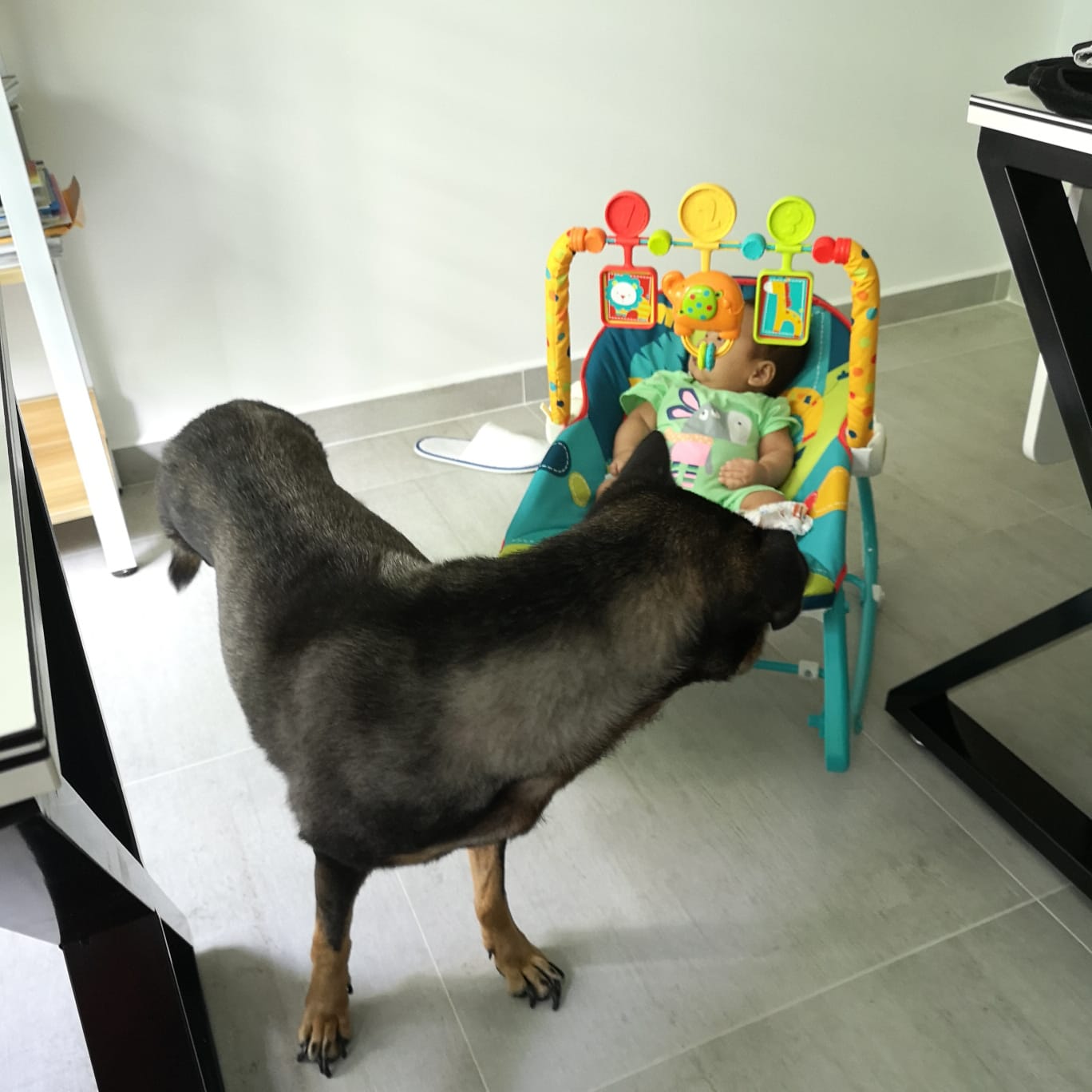
Amazing how a fierce street dog can be so sweet to a baby 


Written by: Felicia Tan

Are You Ready For A Dog?

We all love dogs. They are fun, loyal and always there to greet us when we are home. But affection does not equate to competence in caring for a pet. Before you sign the forms and checkout your new friend, here`s a checklist of factors to consider.

Mathilda (HDB Approved)

Dog for display: The essence of time
The daily tasks in caring for a dog includes: preparing food and water, potty cleaning, bathing and regular walks. But these are just the essentials for keeping your dog alive. If you want a happy dog, Frisbee-fetching and snuggle sessions are the secret ingredients to the recipe. 

For those who lead busy working or studying lives, you will probably need to recruit someone to watch over your furry pal when you are away from home. If you have little downtime, your dog may not get the attention he deserves. Your sleep and personal rest time could also be compromised to attend to your dog`s needs.


SiDa (Special Needs / HDB Approved) 

Rent-a-dog? : The responsibility routine

You don`t rent a dog, you own a dog. And that means you got to merge the responsibilities of caring for him into your daily routine. The added chores may increase your fatigue, but isn’t the company of your new pal worth it? 


Imagine (realistically) where you will be in 5 to 10 years’ time. Will you be married with kids, or a citizen of another country? Insert your dog into the picture. Will the future environment match his needs? Will your family accept him? If you answer ‘maybe’, perhaps you could consider fostering. It is akin to owing a pet but for a shorter period of time (read: less responsibility).


Bank tolerance level: The money matter

Can your bank account tolerate a withdrawal of $300-$500 every month? If your purse strings will snap from this amount, you should probably leave owning a dog for another time. 

The average adoption fee in Singapore ranges from $150-$400. On top of that, medical bills (check-ups, vaccinations), food and miscellaneous items contribute to the monthly triple-figure sum. There`s also one-time expenses such as dog licensing, microchipping, deworming and dog obedience courses. A worthwhile investment or not, you decide. 


Brain workout: The knowledge factor 

Ask after those of your friends who own pets, in particular, dogs. Hound them down with questions: How did they cope with the workload and financial commitment? Get the approval of all your family members as it is a family decision and everyone should be agreeable.

Seek the enlightenment of experienced souls, be it friends, books, or the depthless Internet. Take to heart the lessons others have learnt and avoid walking down those lanes. You could also jot down useful and insightful pointers. Like how you would do adequate research before embarking on a trip or investing in stocks, getting a dog is a big deal and calls for careful thought and homework.


Want or need: The Why Question 

Why do you want a dog? Because a puppy is an IN fashion accessory? Because your idol owns a dog so you want one too? Or you want a snuggle buddy to dote on and you know he will reciprocate your love?


Dig deep into your answers to this question. Is your response something that an older you will cringe and wish your younger self knew better?


If you have gone through this checklist and think (with strong reasons!) that you are ready, please adopt a dog, don’t buy. You can access HOPE Dog Rescue list of dogs up for adoption at http://hopedogrescue.blogspot.sg/p/adoption.html

Written by: Melissa

28.6.19

Every Day Is Sunday (Sundae)

Meet Sunday, our rescue dog who was adopted 7 years ago. She was given the name “Sunday” as we wanted her days to be bright and sunny (that came true for her!). You may wish to read her background and full story here

When she was rescued, she had ehrlichea and had a blood count of only 23. She also had pale gums, very bad conjunctivitis, and had just suffered from a miscarriage. While recuperating at the vet clinic, she managed to escape. She holds the record for the longest missing dog – we searched for her for 12 days and nights!  After she was found, Chiew Guat and her family kindly offered to adopt her because she thought Sunday's ears were really cute and floppy. She kept her name but calls her "Sundae" or "Dae Dae".


That was 7 years ago – Sundae is now a senior dog, estimated to be about 11 / 12 years old. Sunday has found her forever home and her second lease of life with Chiew Guat’s family. Carrying for a senior dog is a whole new ball game, but Sundae is blessed to have a family who loves her to bits and who is willing to go the extra mile to care for her.


Sunday suffered a mild stroke recently, but she remained strong and as sweet as ever. It took her some time to regain balance and to walk properly. This could not have been made possible without her family’s support. We wish to thank Sunday’s family for loving her, and most importantly, for giving her a second chance at life.


Adopting a street dog rescues the animal from a life on the streets – you’re saving a life, and you’re giving them a forever home. They may not look the prettiest or the cutest, but that does not diminish their capacity to love or to be loved. We cannot thank Sunday’s family enough for opening up their hearts and home to her. By doing so, not only did they change Sunday’s life forever, they also helped to free up space in the shelter. This gives other dogs a chance to be saved.


Consider opening up your heart to a street dog as well – the rewards are endless...

Written by: Jeannie

26.6.19

Caring for a Senior Dog

It is no surprise that with time comes age. Getting older can only bring health problems as our bodies start to change, and when it comes to dogs, this is not an exception too. There are common issues that owners with senior dogs go through. Some might even say that this is a whole new ball game, whereby one needs to change his/her lifestyle in order to manage an aging dog.


Charlie, 15 years old 
Senior dogs struggle with issues such as aches and pains, arthritis, poor vision, hearing loss, and kidney or liver issues. Owners of senior dogs might have to change their pet’s diet when their dog gets older. Aging dogs tend to sleep more and eat less, having a few small meals a day instead of two big meals, as their appetite starts to diminish and food becomes harder to digest. It might hurt to hear this but some geriatric dogs even go through canine cognitive dysfunction, where a dog forgets how to eat or drink, an issue that is a human equivalent to Alzheimer’s. In some cases, the owners have a hard time leaving their senior dog alone at home as their pet might be stuck in corners or forget where the water bowl is placed at. Drawing parallels between dogs and human beings, a senior dog’s temperament would change with time. They might become cranky, start snapping and no longer be as tolerant as they once were before.

Charlie

How does one take care of a senior dog? To take the first step forward, owners could schedule regular visits with his/her veterinarian. Although frequent visits lead to more vet bills, these are the little things one can do to keep their aging dogs healthy and happy. It also ensures that their pets are not going through any pain, and if they are, put a stop to it before things transition for the worst. While at the vet’s, one can seek for an age-appropriate diet to maintain the dog’s health. Due to the fact that senior dogs sleep more than average, this leads to a higher risk of developing obesity. With the right nutritional need and exercise such as regular walks and light jogs for a geriatric dog, it will help maintain the dog’s ideal weight and have a beneficial impact on their health in general.


Most importantly, although aging is a difficult and painful thing to witness to one’s dog, spending the remaining time one has with his/her pet is the most important. Provide plenty of toys, offer unlimited hugs, and give them treats when they are good. Aging is inevitable but the memories and feelings both owners and pet have developed overtime remain indefinitely.


Written by: Debbi

18.6.19

What You Need To Know About Canine Cognitive Dysfunction

Do you notice your dog sitting and staring into space more often than usual? Or is he pacing back and forth through the night, and not sleeping as well as he normally does? You may even notice that he is getting scared of the people that he knows and loves.

These signs can point to one thing: Your dog may be afflicted with Canine Cognitive Dementia, also commonly known as dog dementia.

As with dementia in humans, Canine Cognitive Dementia (CCD) is a specific term for a dog’s mental decline that results from physical brain changes. It is a neurological condition with behavioural symptoms that differs from normal ageing. Many people may relegate their dog’s odd behaviour to the degenerative effects of normal ageing; thus many cases of CCD go undiagnosed.

In our experience, we have seen dogs losing weight and not eating their meals. Their owners thought they were being fussy and picky with food, when their dog had actually developed neurological issues which caused them to forget how to eat, or had difficulty coordinating.


What are some of the symptoms of CCD? If you have a dog, you can characterize the telling signs with the DISHA test:

Disorientation: Your dog may appear confused, and keeps staring into space or getting lost or stuck in familiar surroundings. Some dogs may even forget that they had already eaten. He may become more anxious and start barking at nothing in particular. Constant back-and-forth pacing is another symptom.

Interactions: Even the most sweet-natured and sociable dog turns grumpy and irritable. On the other end of the spectrum, he could become overly attached to a person. He may even stop responding when you take his leash out to get ready for his favourite daily walk.

Sleep-wake cycle: A change in sleep cycle and patterns can be a telling sign. Your dog may reverse his normal schedule; if he used to sleep soundly at night, now he could be up all night, wanting your attention.

House soiling: Your dog may forget his toilet training and start soiling the house where he shouldn’t be. Ruling out cognitive changes such as bladder infection, it may be that he has “forgotten” that he should go to a specific spot.

Activity level: He may turn sedentary and passive, with decreased response to stimulation. On the flip side, he might become agitated and display restlessness with non-stop pacing. Some dogs have been shown to develop repetitive behaviours like leg shaking or even licking floors.


Some symptoms of CCD can overlap with other age-related conditions such as arthritis, kidney issues, as well as hearing and sight loss.

You should follow up your DISHA diagnosis with a medical check by a veterinarian.

Is CCD preventable or curable? Probably not but research has shown that it can possibly be delayed with nutritional support and increased mental stimulation. CCD treatment involves the management of behaviour and environment, as well as enhancing the dog’s diet and incorporating appropriate medication. The ultimate aim is to slow down the progression of the disease and improve the quality of life for dogs and their people.


You don’t have to wait till your dog gets on in years before you start implementing preventative measures. It’s best to start when they are young. Regular play sessions or outing can stimulate your dog’s brain and improve his learning abilities. It is possible to slow the deterioration by keeping him physically healthy and mentally active, just like it is for us humans! Creating a conducive environment is helpful too: Avoid changing home decorations or rearranging furniture to reduce confusion and problems with moving around.

Dogs with dementia can continue to live a happy life when given the proper care. Remember old man Matthieu? Formerly a HOPE Dog Rescue dog, he's now 17 and happily adopted. Matthieu has doggy dementia but with medication, he is still enthusiastic and enjoying the things he once did.

Written by: Wee Yen